Why relaxing sounds can help
A steady background sound can soften sudden noises, like a door closing or traffic outside, that might otherwise catch your attention. It also gives your mind something calm and simple to rest on, instead of replaying the day.
Sounds will not suit everyone, and that is fine. Some people prefer silence or earplugs. Try a sound for a few evenings and notice how you feel.
Choosing a sound
- Rain: soft and even, a popular choice for sleep and focus.
- Waves: a slow, regular rhythm that can pair well with slow breathing.
- Forest: birds and leaves bring more variety, which many people enjoy for daytime breaks.
- Campfire: a warm, gentle crackle for a cosy evening atmosphere.
- Your own recordings: a familiar voice, a favourite piece of music or a guided meditation you trust.
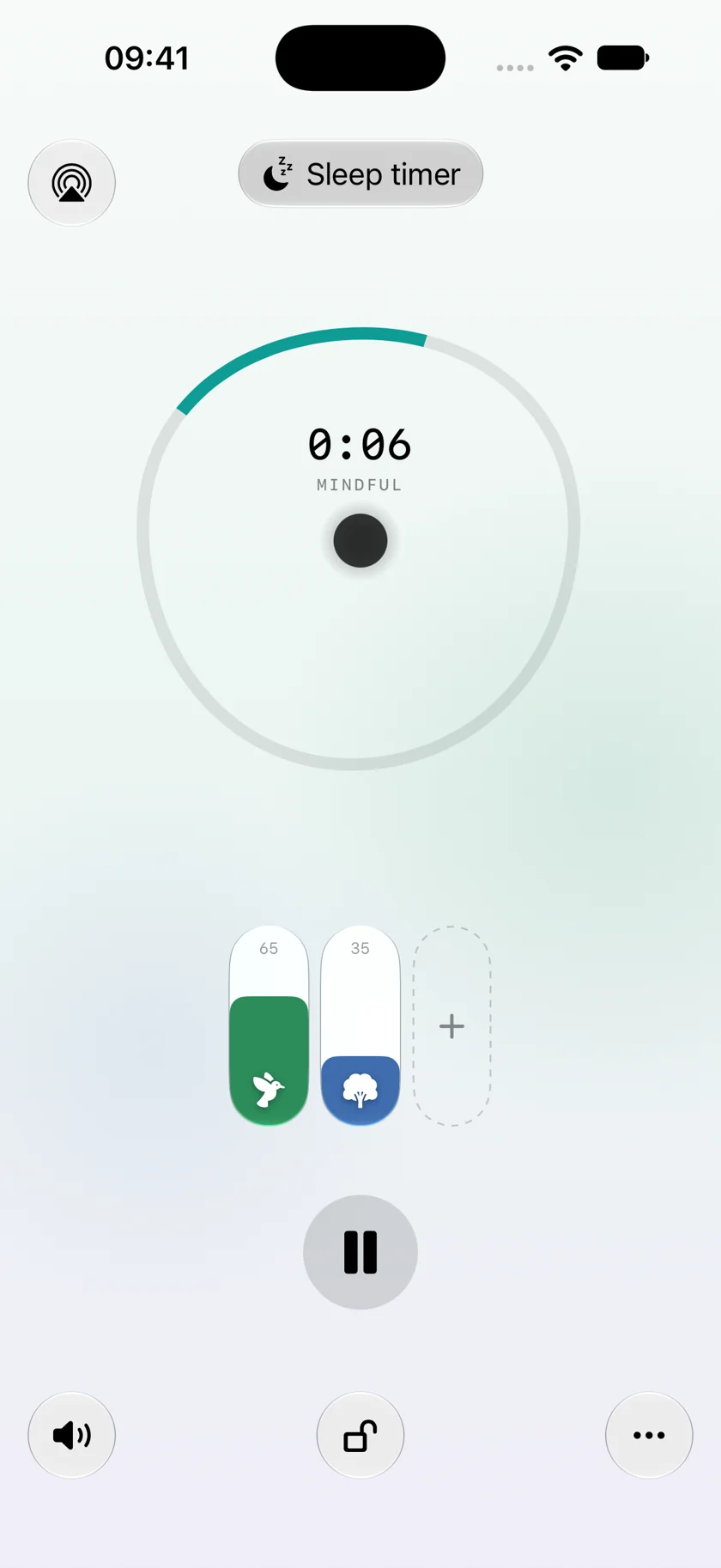
You can also combine sounds, for example rain with a quiet campfire, and adjust each one until the mix feels right.
Tips for using sounds at bedtime
- Keep the volume low. Aim for just loud enough to soften other noises. Quieter is kinder to your hearing, especially through headphones.
- Use a timer. Let the sound stop on its own after you have fallen asleep.
- Put the screen away. Start the sound, then put your phone face down or out of reach so you are not tempted to scroll.
- Keep it consistent. Using the same sound at the same time each night can become a familiar signal that it is time to rest.
Sounds for a short break during the day
You do not have to wait until bedtime. Between tasks, put on headphones, close your eyes and listen to one sound for three to five minutes. When your mind wanders, gently bring your attention back to the sound. It is a simple form of meditation that fits into a busy day.
If you feel tense, pair the sound with slow breathing.
When to talk to a doctor
Relaxing sounds can be part of a calm routine, but they do not treat sleep problems. If you regularly struggle to fall or stay asleep, or you feel very tired during the day, speak to a doctor. The NHS has information about insomnia.