What a panic attack feels like
A panic attack is a sudden rush of intense fear or discomfort. It often comes with physical sensations: a pounding heart, sweating, trembling, shortness of breath, tightness in the chest, dizziness, nausea, or a feeling that things are not real. Many people also fear they are losing control or that something terrible is happening.
Panic attacks can happen even when there is no clear danger, and sometimes seemingly out of nowhere. They feel very real, and they are common. You are not alone, and you are not doing anything wrong.
Steps that can help in the moment
- Name what is happening. Tell yourself: "This is panic. It is very uncomfortable, and it will pass." Saying it in your head or out loud can make the sensations feel less mysterious.
- Find somewhere steady. If it is safe, stay where you are, sit down or lean against a wall. If you are driving, pull over when you can do so safely.
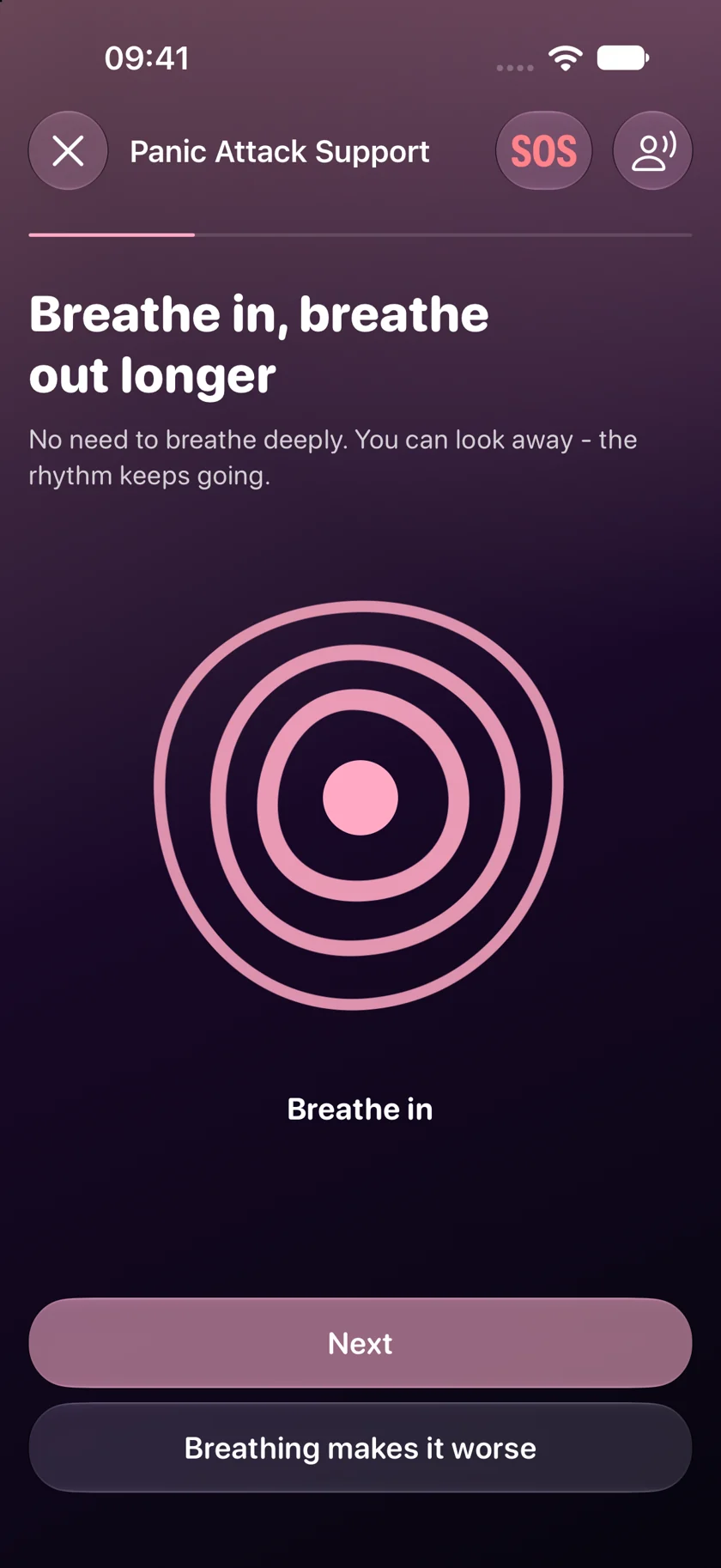
- Slow your breathing. Breathe in gently through your nose and let the out-breath be a little longer than the in-breath. Do not force big, deep breaths. See simple breathing exercises.
- Ground yourself in the present. Notice what you can see, hear and touch. Feel your feet on the floor. The 5-4-3-2-1 grounding technique walks you through it step by step.
- Soften your body. Unclench your hands, drop your shoulders and relax your jaw. Press your feet gently into the floor.
- Let the wave rise and fall. Trying to fight the sensations can make them feel stronger. Notice them, remind yourself they will pass and keep breathing slowly.
- Reach out if you want to. Call or message someone you trust. You do not have to explain everything; "Can you stay on the phone with me for a bit?" is enough.
After the panic attack
When the wave has passed, you may feel tired, shaky or emotional. That is normal. Give yourself a few minutes before you carry on: sit somewhere comfortable, have a drink of water and breathe at an easy pace.
Later, when you feel calmer, it can help to note what happened: where you were, how long it lasted and what helped. Over time, these notes can make patterns easier to see and are useful to share with a doctor.
Prepare in a calm moment
It is much easier to follow a plan you already know. When you feel settled, try this:
- Practise a breathing exercise and a grounding exercise for a few minutes, so they feel familiar.
- Choose one person you could call, and let them know how they can help.
- Keep something calming close: a familiar recording, a song or a sound you like.
- Write a short reminder for yourself, such as "This is panic. It will pass. Breathe out slowly."
When to talk to a professional
Speak to a doctor if panic attacks keep coming back, if you worry a lot about the next one, or if you start avoiding places and situations because of them. Panic attacks and panic disorder are common and treatable, and talking therapies and other treatments can help.
Learn more from the National Institute of Mental Health and the NHS.